SEARCH OF INNOVATION IN EDUCATION ENVIRONMENTS
DOI:
https://doi.org/10.46827/ejes.v0i0.392Keywords:
modern education, open plan, learning studio, advisory based plan, small learning community, mobile classroomAbstract
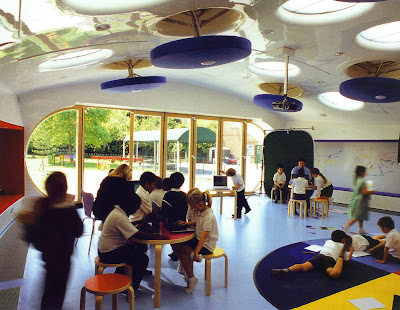
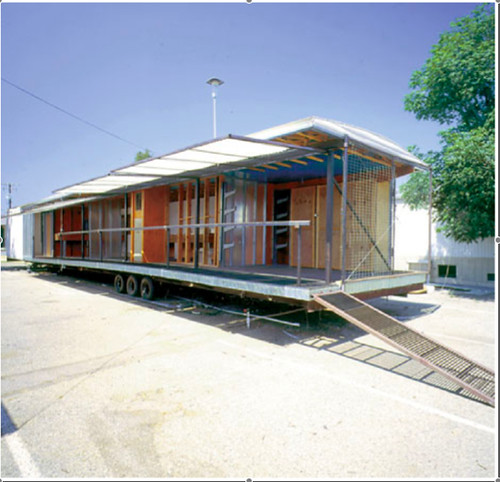
In school design studying spatial qualities, which are in harmony with the education programmes’ goals, is important for creating physical conditions that support associated education process. In new learning approaches it is emphasized that there is no single learning method, that it is necessary to find different methods for learning in schools, and that there is a need to search for new education environments for learning. In this respect this study aims to examine new architectural examples, which are in harmony with the goals of contemporary education approaches, and to shed light on designing new educational buildings as a result. In the scope of this work the approach to schools and opinions that are effective on learning are mentioned briefly, expectations from school architecture are defined, and examples from innovative education environments, which are made to give necessary usage capabilities required by new education approaches, are presented. When the examples are examined its can be seen that flexibility is the primary design criteria and the second important criteria is related to the contribution of the building to awareness on sustainability.
Article visualizations:

References
Anonim, (2011). Büyüyorum. Bursa MEB Okul Öncesi Şubesi Yayını, Vol. 1.
Aydın, B. (2001). Bireysel Özgürlük ve Erdem. H. Ayhan, O. Oğuz, A. Oktay (Eds.). In 21. Yüzyılda Eğitim ve Türk Eğitim Sistemi (pp. 95-110). İstanbul: Sedar Yayıncılık.
Candan, T. K. (2008). Çocuk ve Mimarlık: Çocuklarla Yeni Bir Gelecek, Yaşanabilir bir Kent Kurgulamak. Mimarist, 2008/2, 55-59.
Chiles, P. (2005). The Classroom as an Evolving Landscape. M. Dudek (Ed.). In Children’s Spaces (pp.101-113). Oxford: Architectural Press..
Çağlar, A. (2001). 21. Yüzyılda Okulun Değişen Rolü ve Yeni Eğilimlere İlişkin İyimser Bazı Öngörüler. H. Ayhan, O. Oğuz, A. Oktay (Eds.) In 21. Yüzyılda Eğitim ve Türk Eğitim Sistemi (pp. 81-94). İstanbul: Sedar Yayıncılık.
Day, C. (2007). Environment and Children: Passive Lessons from the Everyday Environment. Oxford: Elsevier.
Dewey, J. (2007). Deneyim ve Eğitim. Ankara: ODTÜ Yayıncılık.
Dudek, M. (2002). Architecture of Schools: The New Learning Environments. Oxford: Architecture Press.
Gardner, H. (2004). Zihin Çerçeveleri Çoklu Zeka Kuramı. İstanbul: Alfa Yayınları.
İnanlı, R. (2007). Açılış Konuşmaları.Okul öncesi Eğitimi ve Öğretmen Eğitimi Sempozyum Kitabı (pp.11-24). İstanbul: Türkiye Özel Okullar Birliği.
Jilk, B. A. (2005). Place Making and Change in Learning Environments. M. Dudek (Ed.). In Children’s Spaces (pp.30-42). Oxford: Architectural Press.
Kronenburg, R. (2003). Portable Architecture. Oxford: Architectural Press.
Kronenburg, R. (2007). Flexible: Architecture that Responds to Change. London: Laurence King Publishing.
Lackney, J. A. (2009a). A Design Language for Schools and Learning Communities. R. Walden (Ed.). In Schools for the Future, Design Proposals from Architectural Psychology (pp.155-168). Cambridge: Hogrefe.
Lackney, J. A. (2009b). History of Schoolhouse in the USA. R. Walden (Ed.). In Schools for the Future, Design Proposals from Architectural Psychology (pp. 19-34). Cambridge: Hogrefe.
Mostaedi, A. (2006). Preschool & Kindergarten Architecture. Barcelona: Carlos Broto.
Nair, P. (2014). Blueprint for Tomorrow, Redesigning Schools for Student-Centered Learning. Cambridge: Harvard Education Press.
Oktay, A. (2001). 21. Yüzyılda Yeni Eğilimler ve Eğitim. H. Ayhan, O. Oğuz, A. Oktay (Eds.). In 21. Yüzyılda Eğitim ve Türk Eğitim Sistemi (pp. 15-38). İstanbul: Sedar Yayıncılık.
Oktay, A. (2007). Okulöncesi Eğitimde Temel Kavramlar, Amaçlar ve Eğitim İlkeleri. M. Sağlam (Ed.). In Özel Öğretim Yöntemleri (pp. 1-18). Eskişehir: Anadolu Üniversitesi Yayınları.
Özden, Y. (2002). Eğitimde Dönüşüm; Eğitimde Yeni Değerler. Ankara: Pegem Yayıncılık.
Prakash, N., Fielding, R. (2007). The Language of School Design, Design Patterns for 21st Century Schools. Minneapolis: Designshare.
Pound, L. (2006). How Children Learn. London: Practical Preschool Books.
Richardson, P. (2008). XS: Green, Big Ideas Small Buildings. London: Thames & Hudson.
Richardson, P. (2009). XS: Extreme, Big Ideas Small Buildings. London: Thames & Hudson.
Siegal, J. (2002). Mobile: the Art of the Portable Architecture. New York: Princeton Architectural Press.
Şahin, B. E. (2011). Participation of Children in Design During Preschool Education: An Independent Atelier Model. Doctoral Dissertation, Uludağ University Graduate School of Natural and Applied Sciences, Department of Architecture.
Taylor, A. (2009). Linking Architecture and Education, Sustainable Design of the Learning Environments. Albuquerque: University of New Mexico Press.
Tekeli, İ. (2003). Eğitim Üzerine Düşünmek. Ankara: Türkiye Bilimler Akademisi Yayınları.
Toğrul, B. (2007). Okulöncesi Eğitimde Kullanılan Yöntem ve Teknikler. M.Sağlam (Ed.). In Özel Öğretim Yöntemleri (pp. 75-100). Eskişehir: Anadolu Üniversitesi Yayınları.
Töremen, F. (2001). Öğrenen Okul. Ankara: Nobel Yayıncılık.
Walden, R. (2009). The School of the Future: Conditions and Processes-Contrubutions of Architectural Psychology. R. Walden (Ed.). In Schools for the Future, Design Proposals from Architectural Psychology (pp.75-113). Cambridge: Hogrefe.
Wortham, S. C. (2002). Early Childhood Curriculum, Developmental Bases for Learning and Teaching. New Jersey: Merrill-Prentice Hall.
Wolff, S. J. (2001). Sustaining Systems of Relationships: The Essence of the Physical Learning Environment that Supports and Enhances Collaborative, Project-Based Learning at the Community College Level, Doctoral Dissertation, Oregon State University.
https://c1.staticflickr.com/7/6130/5948300714_7522bff05e_b.jpg, 2016
https://s-media-cache-ak0.pinimg.com/originals/94/13/97/9413974aa141e9f87d83e24532fcc398.jpg, 2016
http://www.designshare.com/Research/Nair/Plan_txt_440px.gif, 2016
http://www.designshare.com/index.php/projects/djidi-djidi/images@3056, 2016
http://www.designshare.com/index.php/projects/djidi-djidi/images@3057, 2016
http://www.designshare.com/index.php/projects/djidi-djidi/images@3061, 2016
http://peterbrown.typepad.com/.a/6a00e55113a79188330134897cf2b9970c-pi, 2016
http://www.designshare.com/images/name/lippman/lshape/10a_800px.gif, 2016
https://undiaunaarquitecta.files.wordpress.com/2014/09/future-systems.jpg?w=580, 2016
http://i.telegraph.co.uk/multimedia/archive/01192/arts-graphics-slid_1192883a.jpg, 2016
http://3.bp.blogspot.com/_wicciHNvHag/SOq453LfksI/AAAAAAAAAX8/3PDkiGLEmZU/s400/mobile+class+2.jpg, 2016
http://www.designshare.com/Awards/2004/submittal/project_image.asp?image=4&project=453, 2016
http://www.designmobile.com/ecolab.html, 2016
https://c2.staticflickr.com/4/3344/3333809477_85f352ea39.jpg, 2016
http://cubeme.com/classroom-of-the-future-by-gollifer-langston-architects, 2016
www.ooegm.meb.gov.tr/13projeler_mobil_okul.asp, 2010
Downloads
Published
Issue
Section
License
Authors who publish with this journal agree to the following terms:
Authors retain copyright and grant the journal right of first publication with the work simultaneously licensed under a Creative Commons Attribution License that allows others to share the work with an acknowledgement of the work's authorship and initial publication in this journal.
Authors are able to enter into separate, additional contractual arrangements for the non-exclusive distribution of the journal's published version of the work (e.g., post it to an institutional repository or publish it in a book), with an acknowledgement of its initial publication in this journal.
Authors are permitted and encouraged to post their work online (e.g., in institutional repositories or on their website) prior to and during the submission process, as it can lead to productive exchanges, as well as earlier and greater citation of published work (See The Effect of Open Access).